
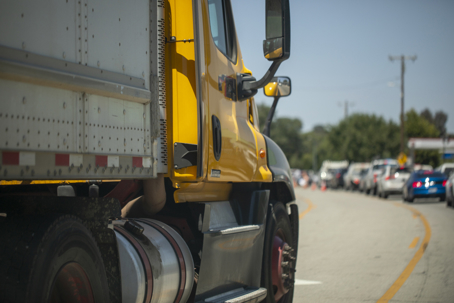
A fully loaded tractor-trailer can weigh up to 80,000 pounds. Most passenger vehicles weigh around 3,500 pounds. When those two collide at 70 miles per hour on an Interstate, the physics almost guarantee that someone in the smaller vehicle will walk away, if at all, with life-changing injuries.
National data reflects that reality. Recent National Safety Council figures show 5,340 deaths and 161,201 injuries in crashes involving large trucks in a single year across the United States, with injury crashes climbing steadily over the past decade. On top of that, Federal Motor Carrier Safety Administration, or FMCSA, data shows that more than a quarter of fatal large truck crashes happen on Interstates, where speeds are highest and catastrophic outcomes are most common.
We have seen the human cost of these numbers for decades. At National Trial Law, we have spent more than 50 years representing people facing catastrophic injuries, including record-setting verdicts and settlements in complex cases across the country. When we look at highway truck crash data, we see more than statistics. We see patterns that help explain why these wrecks so often change lives forever and what that means legally for the people involved.
The Numbers Behind Highway Truck Crashes
To understand how often large truck accidents result in catastrophic injuries, it helps to start with how common and how deadly these crashes are, especially on highways.
Nationally, large truck crashes are both frequent and disproportionately severe. NSC data shows 161,201 people injured and 5,340 killed in crashes involving large trucks during the most recent year studied. Injury crashes involving large trucks are up significantly compared with 2016, and they increased again from 2023 to 2024. In other words, the trend is not moving in the right direction.
FMCSA’s Large Truck and Bus Crash Facts reveal that about 27 percent of all fatal large truck crashes occur on Interstate highways. Those are the very roads designed for high-speed, long-distance freight movement. In these fatal Interstate crashes, roughly 82 percent of the people who lose their lives are occupants of other vehicles, not the truck driver or passengers. The people in smaller vehicles bear the brunt of the harm.
Texas illustrates the scale of the problem in a concrete way. FMCSA FARS data shows that Texas led the nation in large truck fatalities in 2023 with 730 deaths. Those deaths accounted for 17 percent of all traffic fatalities in the state that year and translated to about 24 large truck deaths per 1 million residents, approximately 48 percent above the national average. TxDOT recorded 18,834 large truck crashes in Texas in 2024 alone, including 645 fatal crashes that caused 712 deaths.
Many of those deaths occur along heavy freight corridors. The I-35 corridor connecting Laredo through San Antonio, Austin, Waco, and Dallas-Fort Worth is a prime example. FMCSA data shows that I-35 saw 290 fatalities over a recent five-year period across all vehicle types. When we combine this with national data, a pattern emerges: high-speed corridors with constant commercial traffic are where large truck crashes are most likely to turn catastrophic.
Why Highway Collisions Produce Catastrophic Outcomes
Not every crash involving a truck leads to catastrophic injury, but highway collisions are uniquely dangerous. The reasons come down to mass, speed, and the way trucks and passenger vehicles interact in real-world conditions.
A fully loaded tractor-trailer can weigh up to 80,000 pounds. A typical sedan, SUV, or pickup weighs less than 5,000 pounds. When those vehicles collide, the smaller vehicle absorbs a disproportionate share of the energy. At highway speeds, the force of impact increases sharply. A rear-end collision at 70 miles per hour is entirely different from a low-speed crash at a city intersection.
Highway geometry and traffic patterns also matter. Lane changes, merging at high speed, and differences in acceleration and braking between heavy trucks and cars create situations where a brief lapse in attention or a small misjudgment can have devastating consequences. When those errors happen at 65 or 75 miles per hour, occupants of the smaller vehicle often suffer injuries far more severe than we typically see in city traffic.
One highway-specific danger is the underride collision. An underride crash happens when a smaller vehicle slides under the rear or side of a trailer. At highway speeds, the front of the passenger car can travel beneath the trailer while the trailer’s edge intrudes into the passenger compartment, sometimes shearing off the roof. The injuries that follow are often fatal or permanently disabling. This type of mechanism is rare in low-speed urban crashes but tragically common in severe highway wrecks.
Lighting and location add more risk. FMCSA data shows that 39 percent of fatal large truck crashes occur at night and 13 percent occur on rural Interstates. These are conditions where speeds are high, visibility is reduced, and emergency medical response can take longer. People who might have survived with rapid treatment in an urban setting may not receive that same chance on a rural stretch of highway.
When we put these pieces together, the picture becomes clearer. Large truck highway collisions are more likely than other crashes to involve extreme forces, intrusion into the passenger compartment, and delays in medical care. That combination is exactly what produces the catastrophic injuries that keep people from returning to work or living independently.
What Counts as a Catastrophic Injury
People often use the word “catastrophic” to mean “very serious,” but in injury law, the concept has a more specific meaning. Understanding that difference is important because it affects both how a case is evaluated and what kinds of damages may be available.
Legally, an injury is catastrophic when it permanently impairs a person’s ability to work, care for themselves, or participate in daily life. It is not just about how painful or frightening the crash was on the day it happened. The key question is whether the injury causes long-term or lifelong limits on independence and earning ability and whether it requires ongoing medical care, rehabilitation, or assistance.
In the truck crash context, certain types of injuries frequently meet that catastrophic threshold:
- Spinal cord injuries leading to paraplegia or quadriplegia. Damage to the spinal cord can cut off communication between the brain and parts of the body, leading to partial or complete paralysis. These injuries often require wheelchairs, accessible housing modifications, and round-the-clock assistance.
- Traumatic brain injury, or TBI. A TBI occurs when a blow or jolt to the head disrupts normal brain function. Severe TBIs can cause permanent cognitive problems, memory loss, changes in personality, and loss of motor control. Even “mild” TBIs can cause long-lasting symptoms that keep people from returning to their prior jobs.
- Traumatic amputations. Limbs crushed or severed in a crash can lead to amputation. Prosthetics, repeated surgeries, and major changes in work and daily activities are common.
- Severe burns. Fires and explosions in truck crashes can cause third-degree burns, leading to extensive scarring, contractures, and a need for repeated reconstructive surgeries.
- Serious internal organ damage. Injuries to the lungs, liver, kidneys, or other vital organs can cause permanent disability, reduced life expectancy, and the need for ongoing medical monitoring or transplant evaluation.
Once an injury is recognized as catastrophic, the legal analysis changes. Instead of focusing mainly on current medical bills and short-term lost wages, we look at long-term and lifetime consequences. That is where concepts like life care planning and loss of earning capacity come into play.
A life care plan is a detailed assessment, usually prepared by a medical or rehabilitation professional, that projects all of the medical care, equipment, services, and support a person will likely need for the rest of their life. This can include future surgeries, medications, in-home care, assistive technology, psychological counseling, and housing modifications.
Loss of earning capacity looks at what the injured person could have earned over their working life if the crash had not occurred, then compares it with what they are now able to earn, if anything. This is different from simply adding up wages lost during the initial recovery period. It often requires input from vocational and economic experts.
Catastrophic injury cases also involve significant non-economic damages for the permanent loss of function, pain, limitations, and changes in relationships that come with lifelong disability. These categories are either far smaller or not present at all in cases involving injuries from which a person can fully recover.
Multiple Parties May Bear Responsibility
Another key difference between a highway truck crash and a typical car accident is the number of potentially responsible parties. Liability rarely ends with the driver behind the wheel of the truck.
In most commercial trucking cases, the motor carrier, or trucking company, is responsible for the driver’s negligence under a legal doctrine called respondeat superior, also known as vicarious liability. This doctrine means that an employer can be held liable for the harm caused by an employee who is acting within the scope of their job.
The motor carrier can also face its own direct liability. For example, if a company hired a driver with a history of serious violations, kept a driver on the road despite repeated safety problems, or failed to enforce federal hours-of-service rules, that can form the basis for claims of negligent hiring, negligent retention, or negligent supervision. These claims focus on the company’s choices rather than only on what the driver did on the day of the crash.
FMCSA regulations play a central role in this analysis. Violations of key safety rules can function as negligence per se. Negligence per se is a legal concept that treats the violation of a safety statute or regulation as automatic proof of a breach of duty when the rule was intended to prevent the type of harm that occurred. In trucking cases, examples can include:
- Hours-of-service violations under 49 CFR Part 395. Federal rules limit how many hours a driver can be on duty or behind the wheel without rest. A documented hours-of-service violation, especially in combination with fatigue evidence, can be powerful proof of negligence.
- Driver qualification problems. A driver who failed a pre-employment drug screen, lacked proper licensing, or had a disqualifying medical condition but was still sent out on the road presents serious liability issues for the carrier.
- Maintenance and inspection failures. FMCSA rules require regular inspections and proper maintenance of critical systems like brakes and tires. Maintenance records showing neglected repairs or repeated problems can demonstrate that a company ignored known dangers.
Additional parties may also share responsibility. An improperly loaded trailer can cause a truck to become unstable, making rollovers and jackknifes more likely. In that case, the cargo loading company or shipper may be implicated. If a defective part, such as a failing brake component or tire, contributed to the crash, the manufacturer or distributor of that part may face product liability claims. When independent maintenance contractors perform substandard repairs that lead to mechanical failure, they can also become defendants.
From the injured person’s perspective, this multi-defendant landscape matters because each responsible party can bring additional insurance coverage and assets to the table. Catastrophic injury cases often involve medical and life care costs measured in millions of dollars over a lifetime. Fully identifying all liable entities is essential to pursuing a recovery that reflects the true scope of the harm.
Evidence That Disappears Quickly After a Crash
In highway truck crash cases, the difference between a fully documented catastrophic injury claim and a partial picture often comes down to what happens in the first days and weeks after the wreck. Trucking companies and their insurers understand this. They move quickly to protect their interests. Injured people and their families are usually focused on survival and recovery, not on evidence. That imbalance makes early evidence preservation critical.
A central piece of modern trucking evidence is electronic logging device, or ELD, data. An ELD automatically records a driver’s hours of service, driving time, and often GPS location. Federal rules require carriers to keep ELD data, but only for a limited time, typically six months. If no preservation steps are taken, that data can be routinely deleted in the ordinary course of business.
Event data recorders, sometimes called “black boxes,” and engine control modules can capture information about speed, braking, throttle position, and other pre-crash details. Dispatch communications, text messages, and internal emails can reveal schedule pressures or ignored safety concerns. Driver qualification files document hiring decisions, training, and prior incidents. Maintenance files show whether the truck was properly inspected and repaired.
If these records are not preserved, crucial information about why a crash happened can be lost. That is where a spoliation letter becomes important. Spoliation refers to the destruction or loss of evidence that should have been preserved. A spoliation letter is a formal notice sent to the trucking company and other potential defendants demanding that they preserve specific categories of evidence, including ELD records, black box data, driver qualification files, maintenance logs, and communications related to the trip.
At the same time, trucking companies and insurers often deploy rapid-response teams to crash scenes. These teams may include investigators, reconstructionists, and lawyers. Their job is to gather evidence, photograph the scene, interview witnesses, and, from their perspective, frame the facts in a way that limits their client’s exposure. When one side has professionals on the ground within hours and the other is in a hospital intensive care unit, the risk of a one-sided evidentiary record is obvious.
In Texas, the urgency is reinforced by the statute of limitations. Under Section 16.003 of the Texas Civil Practice and Remedies Code, most personal injury claims must be filed within two years of the date of injury. That deadline governs the lawsuit, not the investigation, which should start much earlier. Nationwide, similar time limits exist, and waiting too long can mean witnesses disappear, physical evidence changes, and electronic data is overwritten.
For families facing catastrophic injuries after a large truck highway crash, acting quickly to protect evidence is one of the most important steps they can take, even while the medical situation is still unfolding.
Putting It All Together After a Catastrophic Truck Crash
When we step back, a picture emerges. Large truck crashes on highways are more likely than typical collisions to produce catastrophic injuries because of the extreme forces involved, the risk of underride and vehicle intrusion, and conditions that delay or complicate emergency response. The injuries that result often permanently alter a person’s ability to work and live independently, triggering complex questions about life care needs and loss of earning capacity.
At the same time, these cases rarely involve just one negligent driver. They are built on layers of responsibility, from the motor carrier that hired and dispatched the driver, to the companies that loaded the cargo or maintained the truck, to manufacturers of critical components. FMCSA regulations and their violations, such as hours-of-service violations, defective maintenance, or inadequate driver screening, can serve as powerful evidence of negligence per se when properly investigated and preserved.
We have seen how quickly crucial records like ELD data, black box downloads, and internal communications can disappear if no one acts to preserve them. Rapid-response teams working for trucking companies and insurers are often on scene while an injured person is still unconscious. Protecting a catastrophic injury claim means leveling that playing field as early as possible.
Handling these cases effectively requires a deep understanding of federal trucking regulations, a comfort level with catastrophic injury medicine, and the trial capability to stand up to well-funded corporate defendants. For more than 50 years, we at National Trial Law have represented people in complex, high-stakes injury cases across the country, including record-breaking verdicts and settlements. If you or someone you love suffered catastrophic injuries in a large truck highway crash and you are trying to understand what comes next, you can reach us at National Trial Law at (833) 913-1885 to discuss your situation and your options.